Sailing across the Atlantic takes 2 to 4 weeks on the classic trade-wind route from the Canary Islands to the Caribbean, roughly 2,700 to 3,000 nautical miles. A typical 40-foot cruising boat averaging 5 to 6 knots makes it in 18 to 24 days. The west-to-east return via Bermuda and the Azores takes 3 to 5 weeks. Racing boats have done it in under 6 days; the outright record is under 4.
Columbus took 5 weeks in 1492. A modern cruising couple on a production boat takes about 3. The ocean has not shrunk; the boats, the forecasts, and the routing got better. Here is what actually determines your number.
The crossing routes and their times
East to west: the trade-wind milk run
The classic route runs Canary Islands to the Caribbean (usually St. Lucia, Martinique, or Antigua), riding the northeast trade winds that blow warm and steady all winter. Distance: 2,700 to 3,000 nautical miles depending on how far south you dip.
The old sailing directions still work: head south until the butter melts, then turn right. Dropping toward 18 to 20 degrees north finds firmer trades, adds miles, and usually saves days.
- Fast cruising boats (45 to 55 feet, performance-oriented): 14 to 17 days.
- Typical cruisers (36 to 45 feet): 18 to 24 days.
- Smaller or heavier boats (under 36 feet): 21 to 30 days.
The ARC rally (Atlantic Rally for Cruisers), which sends 150-plus boats from Las Palmas to St. Lucia every November, reports fleet averages in the 18 to 21 day range most years, with the fastest multihulls finishing in 8 or 9 days and the tail of the fleet arriving after a month.
West to east: the northern return
Coming back, boats leave the Caribbean or US East Coast in May or June, ride the Gulf Stream and westerlies to Bermuda (5 to 7 days from the Caribbean), continue to the Azores (12 to 16 days), rest, then finish to Portugal, England, or Gibraltar (7 to 10 days).
Total sailing time: 21 to 33 days, spread over 4 to 6 weeks with stops. The northern route is colder, less steady, and crosses more weather systems, which is why the guidebooks call the east-west crossing a vacation and the return a delivery.
The northern shortcut
Newfoundland to Ireland squeezes the ocean to about 1,700 nautical miles, and high-latitude sailors cross in 10 to 14 days through fog, ice risk, and gales. Shorter distance, harder miles.
What sets your speed
Boat size and hull speed
Displacement hulls top out near hull speed: 1.34 times the square root of waterline length in feet. A 32-footer with a 26-foot waterline maxes near 6.8 knots and averages 5 in real trade-wind conditions. A 50-footer averages 7-plus. Over 2,800 miles, that difference is a week.
Daily runs in practice
Cruising crews talk in 24-hour runs. Honest numbers for the trade-wind route:
- 120 to 140 miles per day: normal for a 36 to 42 foot cruiser.
- 150 to 180 miles per day: a fast 45 to 55 footer or a cruising cat in fresh trades.
- 200-plus miles per day: performance multihulls and race boats.
Divide 2,800 by your realistic daily run and add a day or 2 for light patches. That arithmetic predicts crossings better than any brochure.
Weather windows and the calendar
Timing beats boat speed. The trade-wind crossing happens November through January, after hurricane season ends and while the trades blow steady 15 to 25 knots. Cross in the wrong month and you add days of calms or dodge late-season storms. The return leg happens May to July, between winter gales and the new hurricane season.
Crew endurance
A full crew of 4 to 6 presses the boat hard around the clock. A couple sails more conservatively, reefs earlier at night, and accepts a slower average in exchange for arriving rested and married. Singlehanders add another 10 to 20 percent to the calendar.
The records, for scale
- Outright west-to-east record: the 120-foot trimaran Banque Populaire V, 3 days 15 hours in 2009, averaging over 32 knots.
- Solo records sit under 6 days, set by giant Ultim trimarans.
- Monohull crewed record: under 7 days, set by the 100-foot Comanche in 2016.
- Fastest ARC cruising divisions: multihulls around 8 to 9 days.
These boats sail 3 to 5 times faster than a cruising yacht and cost more than most marinas. They mark the ceiling, and they make a 20-day family crossing look exactly as respectable as it is.
What 3 weeks at sea is actually like
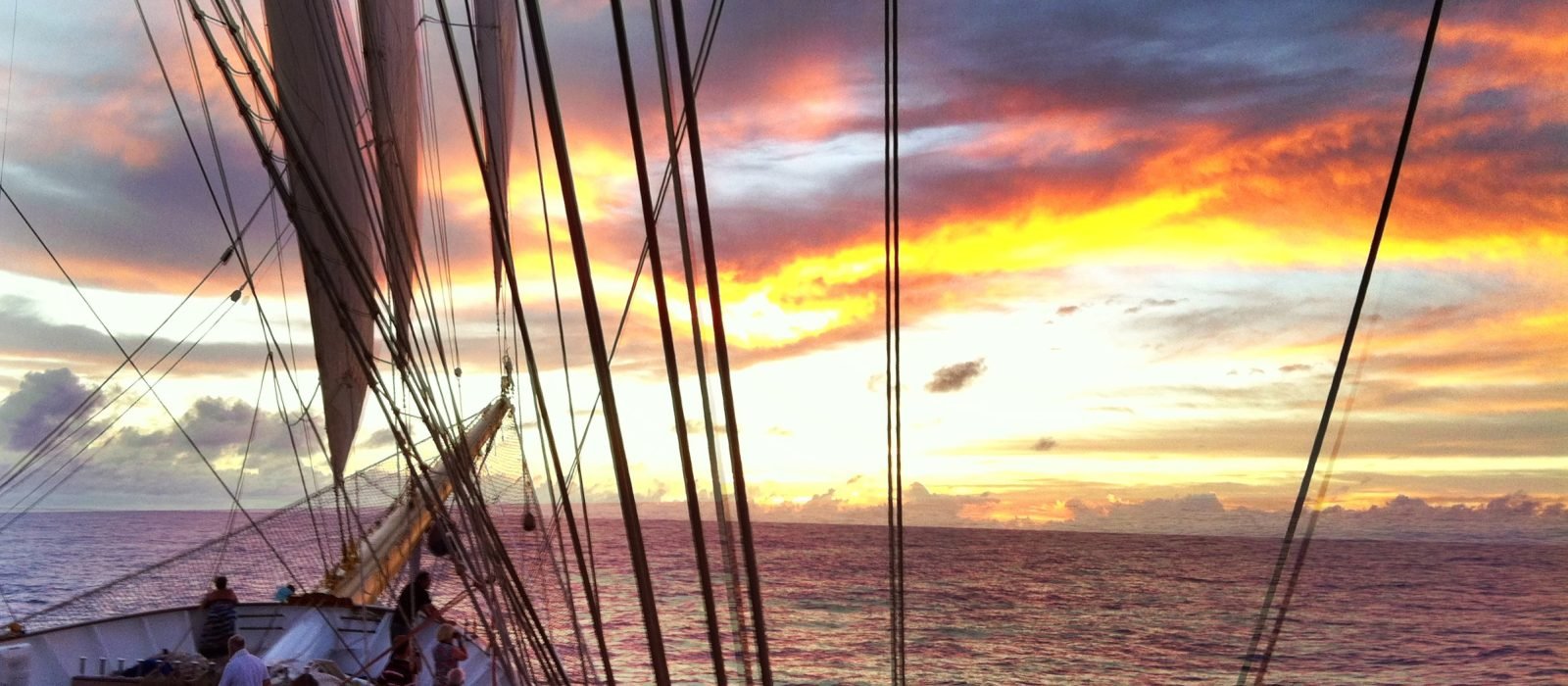
Days 1 to 3: seasickness, adjustment, and the fleet thinning out of VHF range. Days 4 to 10: the routine locks in. Watches, naps, bread baking, flying fish on deck at dawn, 1,000 miles from anywhere and completely calm about it. Days 11 to 18: the wind settles aft, the crew rigs the pole, squalls arrive at 2 am like clockwork, and everyone starts talking about rum punch. The last 48 hours stretch longer than the first week.
Most crews finish and say the same 2 things: it was easier than they feared, and it changed how big the world feels.
Planning numbers to steal
- Distance Canaries to St. Lucia: about 2,800 nautical miles on the southern dip.
- Budget 21 days of food and 25 days of water and fuel margin for a 40-footer.
- Best departure: late November, after the ARC clears the docks and hurricane season closes.
- Watch system for a couple: 3 on, 3 off at night, loose in daytime. For 4 crew: 3-hour rotations.
- Expect 1 or 2 gear failures. The standard trio: autopilot, alternator, or a chafed halyard. Carry spares for all 3.
The Atlantic has carried small sailboats across for 500 years. Pick the right season, do the arithmetic honestly, and the ocean gives you a 3-week corridor of steady wind, warm nights, and the longest exhale of your life.