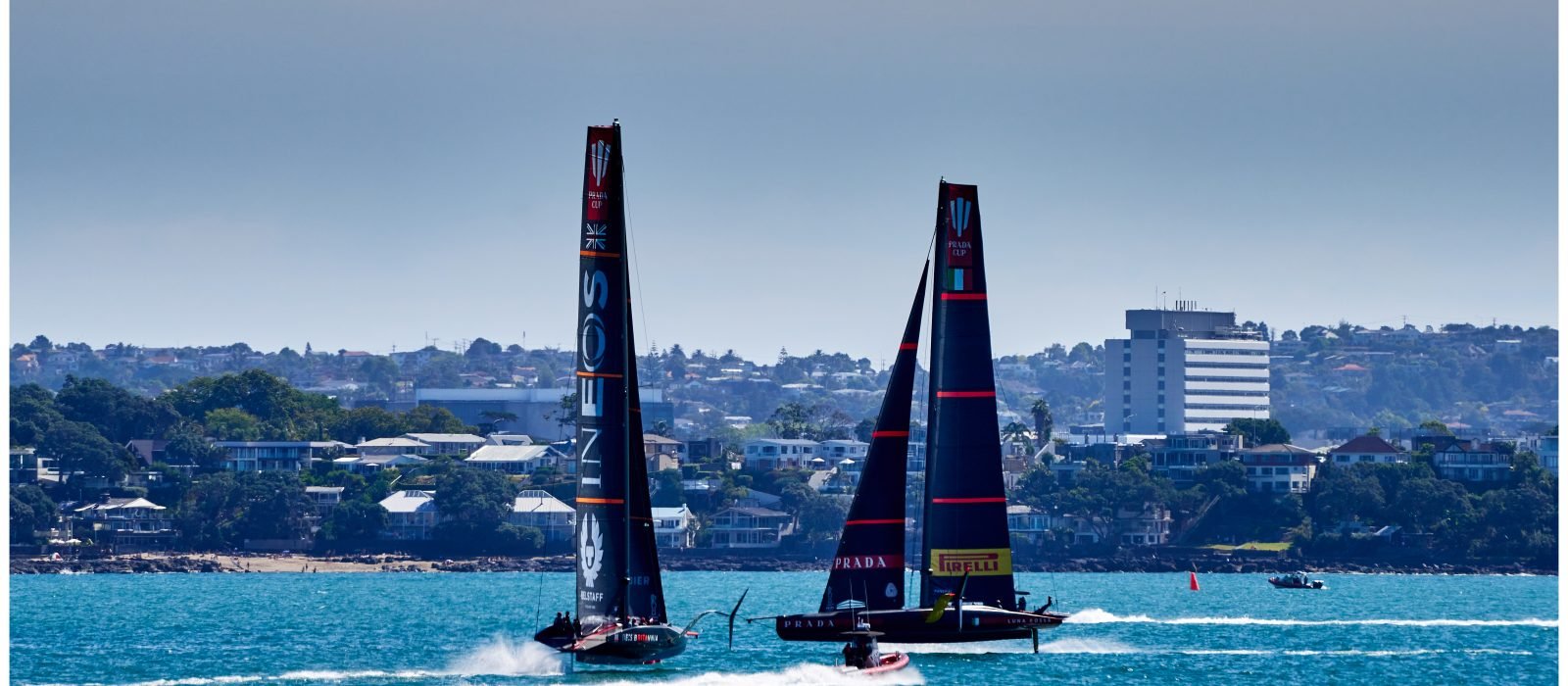
The Louis Vuitton 38th America’s Cup Preliminary Regatta Naples runs from 24 to 27 September 2026. Nine AC40s from six teams, eight fleet races across three days, then one winner-takes-all match race between the top two boats. None of it scores toward the Cup.
Updated 20 September 2026. Racing had not started when this was written, so there are no results below. This is a preview.
The America’s Cup Naples preliminary regatta is the second event of the AC38 cycle, after Cagliari in May, and the first time these crews race on the water that decides the Cup itself in July 2027.
A preliminary regatta is a Defender-run event under the Protocol, sailed in one-design AC40s rather than the teams’ own AC75s. Cagliari carried no points into Naples, and Naples carries none into 2027. The prize is bragging rights and four days of racing data.
Who is racing in Naples
Six teams, nine boats. Emirates Team New Zealand, GB1 and Luna Rossa each enter two AC40s, the second crewed by their women and youth sailors. TUDOR Team Alinghi, La Roche-Posay Racing Team and American Racing Challenger Team USA enter one boat each.
Team Australian Challenge, an accepted AC38 challenger, is not on the start line. American Racing makes its preliminary regatta debut after sitting out Cagliari, and has been training on site in Naples since early September.
An AC40 races with four sailors: two helms and two trimmers. Several teams have announced squads larger than that and will pick from them, so the names below are the pool rather than a fixed line-up.
| Entry | Flag | Named sailors for Naples | How firm |
|---|---|---|---|
| Luna Rossa (principal) | ITA | Peter Burling, Marco Gradoni, Ruggero Tita (helms); Maria Giubilei, Gianluigi Ugolini, Umberto Molineris (trimmers) | Announced by the team on 14 September; line-ups decided daily |
| Luna Rossa (women and youth) | ITA | Margherita Porro, Massimiliano Antoniazzi, Lorenzo Sirena (helms); Maria Vittoria Marchesini (helm/trim); Giovanni Santi, Alice Linussi (trimmers) | Announced 14 September; line-ups decided daily |
| Emirates Team New Zealand (principal) | NZL | Nathan Outteridge and Seb Menzies (helms); Andy Maloney and Iain Jensen (trimmers) | Confirmed by the team, week of 14 September |
| Emirates Team New Zealand (women and youth) | NZL | Jake Pye and Erica Dawson (helms); Serena Woodall and Josh Armit (trimmers) | Confirmed by the team, week of 14 September |
| GB1 (Challenger of Record) | GBR | Dylan Fletcher, Ben Cornish, Bleddyn Mon, Andrea Tesei | Reported in the sailing press; roles not split out publicly |
| Cobham-Ultra GB2 (women and youth) | GBR | Hannah Mills (team principal and helm), Ellie Aldridge; Sam Webb and Matt Beck also named in reports | Mills and Aldridge confirmed by the team in August; the four-up Naples line-up is not confirmed |
| TUDOR Team Alinghi | SUI | Paul Goodison leads the sailing group. Squad also includes Phil Robertson, Nicolas Rolaz, Pietro Sibello, Nathalie Brugger, Jason Waterhouse | Naples four not announced at 20 September |
| La Roche-Posay Racing Team | FRA | Quentin Delapierre (skipper). Squad also includes Diego Botin, Enzo Balanger, Jason Saunders, Florian Trittel, Leigh McMillan, Bruno Mourniac, Tim Lapauw, Amelie Grassi | Naples four not announced at 20 September |
| American Racing Challenger Team USA | USA | Harry Melges IV (helm). Squad also includes Lucas Calabrese, Riley Gibbs, Hans Henken, Michael Menninger, Louisa Nordstrom | Melges named as helm in September reporting; the rest of the four not confirmed |
Format, scoring and schedule
Eight fleet races, then a match race. The sailing instructions were published in the week before the event and set out the detail.
- Thursday 24 September: practice racing for the fleet. Race Village open 11:00 to 20:00.
- Friday 25 September: three fleet races, first warning around 14:13 CEST, finished by about 16:00.
- Saturday 26 September: three fleet races.
- Sunday 27 September: two fleet races, then a single match race between the top two boats on the fleet-race scoreboard.
Scoring runs 10 points for a win down to 2 points for ninth. Courses are windward/leeward with gates, in a short or longer configuration depending on breeze. The time limit is 25 minutes and every boat has to finish within 5 minutes of the winner. Two legs have to be completed for a race to count. The wind range is 7.5 to 21 knots true, with a requirement of at least 7 minutes to the first mark in light air.
One change from Cagliari matters more than it sounds. In Sardinia a team could play a single 5-minute delay card during fleet racing to sort out a technical problem. Chief Umpire Richard Slater has deleted that option for fleet racing in Naples. A delay can only be requested before the final match. Gear failures now cost races outright.
Sources differ slightly on the shape of the week. The event page on americascup.com describes three races every afternoon, while the official preview and the teams give 3, 3 and 2. The sailing instructions release also lists official practice racing across 23 to 25 September, which overlaps the first scoring day. Treat the daily race count as provisional and expect the race committee to move things for wind.
Where this sits on the road to AC38
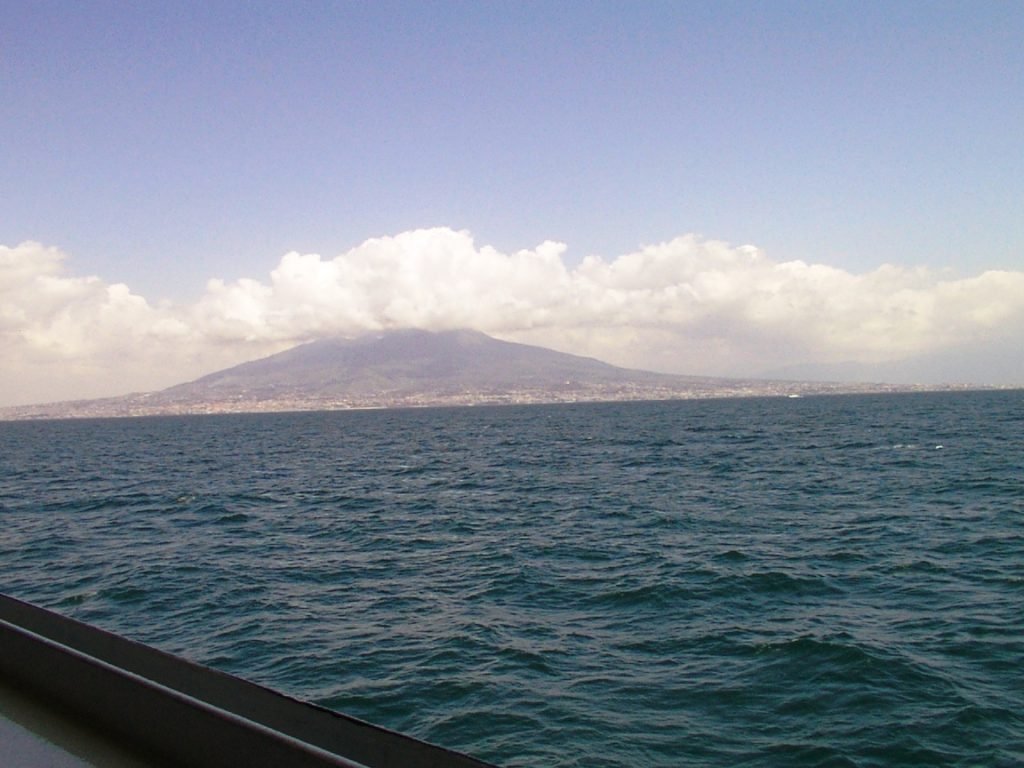
Naples hosts the 38th America’s Cup in 2027, the first Italian host city in the event’s history. The teams are basing at the Navy Logistics Command at Nisida for this regatta and then move to Bagnoli, where they stay through to the Cup.
The 2027 programme, as published by the organisers and the teams:
- 22 to 23 May 2027: AC75 fleet racing opens the Louis Vuitton Cup, with all seven AC75s on the same start line.
- 26 May to 11 June 2027: triple round robin match racing.
- 12 to 13 June 2027: repechage.
- 16 June to 4 July 2027: Louis Vuitton Cup semi-finals (first to five) and final (first to seven).
- From 10 July 2027: the America’s Cup Match, best of 13, first to seven wins.
Reserve days are built in, so those dates will move.
Cagliari in May was the first outing. Luna Rossa topped the eight-race fleet series and then beat Emirates Team New Zealand in the match race final after the Kiwis got the start wrong. Luna Rossa’s women and youth crew led the fleet series for two days before display problems, an over-the-line penalty and a disqualification ended it. GB1 lost the first two races to a traveller-system failure and reported five races missed, then won a race on the final day.
What the AC40 results will show
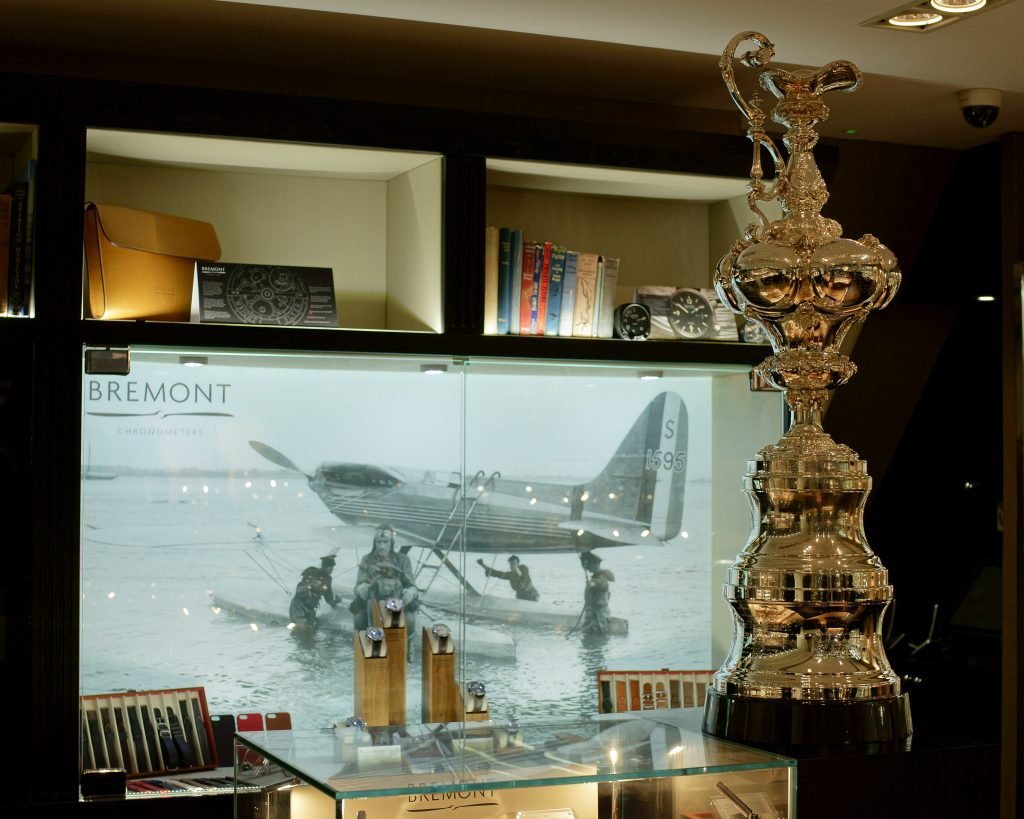
The AC40 is one-design and supplied, so boat speed differences between entries are small. What is left is sailing: start timing, mode selection, when to bail out of a cross, how clean the manoeuvres are with four people doing jobs that used to need eight.
Fleet racing in particular is now worth taking seriously. The Louis Vuitton Cup opens with two days of AC75 fleet racing in May 2027, and a nine-boat AC40 fleet on a short course is the closest thing to practice for it. Traffic management at a crowded first mark is a skill, and Cagliari showed the teams are at different points on that curve.
There is a selection angle too. The AC38 Protocol requires at least one woman in the AC75 crew, and the women and youth AC40 entries are where those sailors get racing miles in front of the people picking the Cup crew. Luna Rossa has said its Naples line-ups will be decided day by day so more of the squad gets time on the water. Emirates Team New Zealand has swapped which side of the boat its helms and trimmers work on compared with Cagliari.
And the venue is the venue. Every hour on the Bay of Naples in a foiling boat is local knowledge the teams keep.
What the AC40 results will not show
The America’s Cup is a design contest, and the AC40 hides the design. Foil shapes, systems architecture, aero package, control software: none of it is on display in Naples. A team can be quick in an AC40 and slow in its AC75, and the reverse.
The boats are different in ways that change the job. The AC75 for AC38 races with five sailors, at least one of them a woman, and it is battery-powered with manual grinding prohibited. The cyclors are gone. Managing a finite power budget across a race is a Cup skill with no AC40 equivalent.
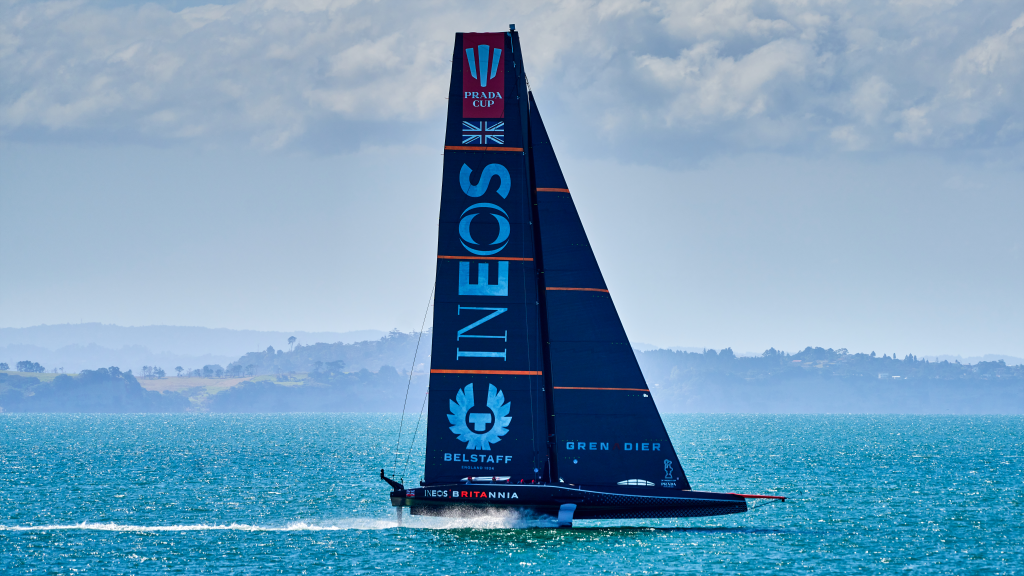
Reliability distorts the scoreboard. GB1 finished last in Cagliari after losing five races to one broken part, which says something about charter-boat preparation and very little about the team’s pace. With the fleet-race delay card removed for Naples, a similar failure will be punished harder.
Then there is the sample. Eight short races and one match race, sailed by rotating crews on a venue every team is still learning, in late September. The Cup is raced in May, June and July, when the Bay of Naples sea breeze behaves differently. I would not read a Naples scoreline as a ranking for 2027.
How to follow the America’s Cup Naples preliminary regatta
- Live stream: free on the official America’s Cup YouTube channel, with replays available straight afterwards.
- New Zealand: coverage via TVNZ.
- In person: the Race Village at Rotonda Diaz (Mappatella Beach) on Via Francesco Caracciolo, with dock-out and dock-in shows, big screens and free entry. There are designated waterfront spectator zones along the shore.
- Timing: racing from roughly 14:13 CEST each day and done by about 16:00. That is 13:13 in the UK, 08:13 on the US east coast, and 00:13 the following morning in New Zealand.
Official start lists and results go up on americascup.com/naples. If you want one thing to watch, watch the starts. In a one-design fleet of nine on a 25-minute course, the boat that gets off the line cleanly usually stays there.