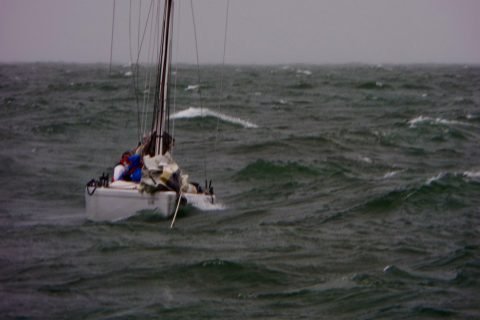
A sailboat has 4 main systems: the hull (the body, including keel and rudder), the rig (mast, boom, and the wires holding them up), the sails (mainsail and headsail on most boats), and the running rigging (halyards that hoist and sheets that trim). Learn those 4 groups and every other part slots into place.
Boat vocabulary scares people off before the sailing even starts. It should not. Sailors did not invent 500 words to gatekeep; they invented them because “pull the rope” fails when there are 11 ropes. Precision is the whole point.
Here is the complete tour, bow to stern, deck to keel, organized so it sticks.
The hull: everything that floats
- Bow: the front. Stern: the back. Port: left when facing the bow. Starboard: right. Port has 4 letters like “left.” That trick has worked for a century.
- Deck: the top surface you walk on. Cockpit: the recessed working area where the crew sits and steers. Cabin (or saloon): the living space below. Companionway: the stairway between them.
- Freeboard: the hull height above the waterline. Draft: the depth below it, the number that decides which harbors you enter and which sandbars you meet.
- Transom: the flat back of the stern. Gunwale (pronounced GUN-nel): the top edge of the hull sides. Toe rail: the low lip along the deck edge that saves your footing when the boat heels.
The keel
The fin under the boat, usually lead or iron, doing 2 jobs at once: its weight counters the sideways push of the wind (so the boat heels instead of flipping), and its shape grips the water (so the boat goes forward instead of sliding sideways).
Common types: fin keel (deep, fast, standard on modern boats), full keel (long and traditional, steady and forgiving), wing and bulb keels (concentrating weight low with less depth), and swing or centerboard keels (retractable for shallow water). On small dinghies the job goes to a centerboard or daggerboard, with the crew’s weight replacing the lead.
The rudder and steering
The rudder is the underwater blade that steers. It connects to either a tiller (a direct stick, standard under about 30 feet) or a wheel. The helm is the steering station, and the person steering “has the helm.”
The rig: what holds the sails up
- Mast: the vertical spar. Most modern boats carry one, making them sloops. Two masts make a ketch, yawl, or schooner depending on arrangement.
- Boom: the horizontal spar along the bottom of the mainsail, hinged to the mast at the gooseneck. The boom is the part that hits heads. Duck first, argue later.
- Spreaders: the horizontal struts partway up the mast that push the rigging wires outboard for better support.
Standing rigging
The fixed wires keeping the mast upright, tensioned once and left alone:
- Forestay: mast to bow. The headsail hoists along it.
- Backstay: mast to stern, balancing the forestay’s pull.
- Shrouds: mast to the side decks, in upper and lower pairs, keeping the mast from falling sideways.
- Chainplates: the metal straps anchoring all those wires to the hull.
The sails
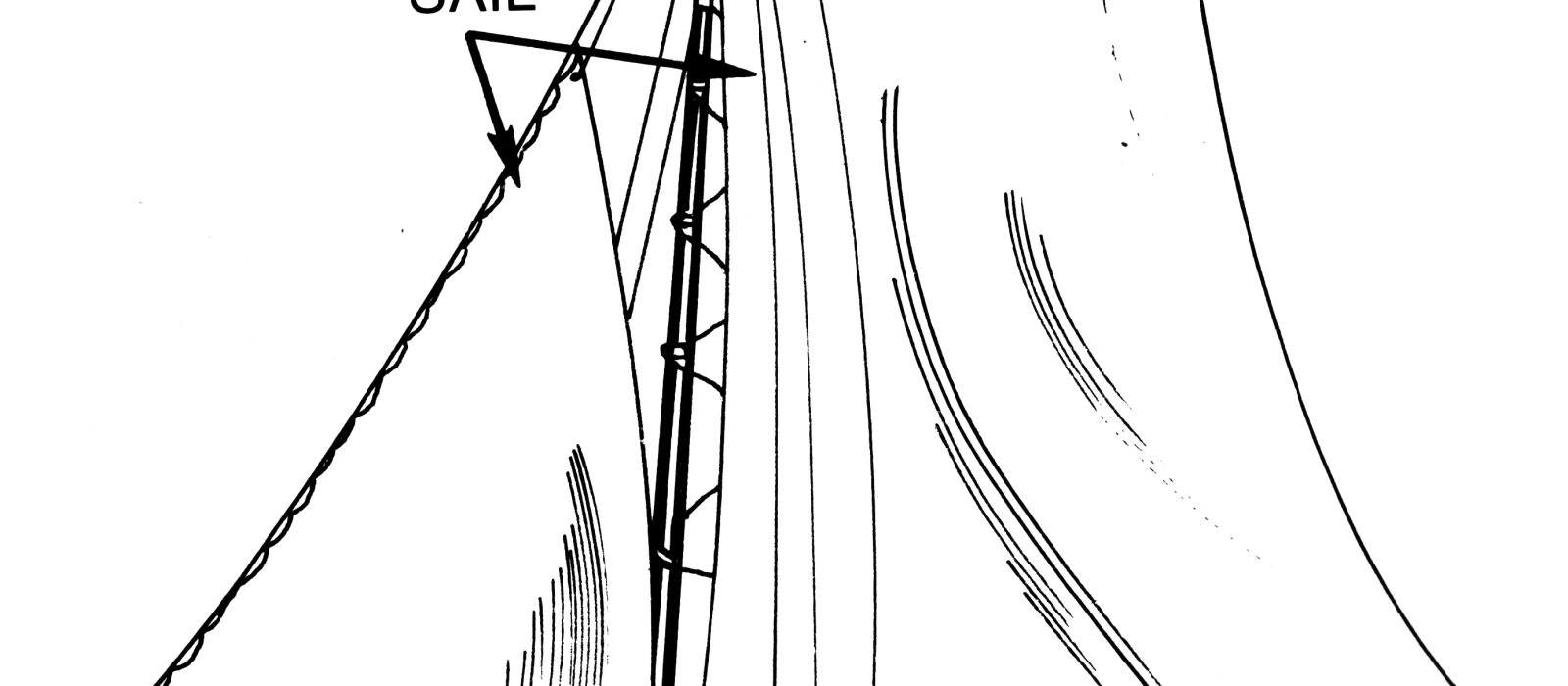
A standard sloop flies 2 sails. Every sail shares the same anatomy: 3 corners and 3 edges.
- Corners: head (top), tack (forward bottom), clew (aft bottom).
- Edges: luff (leading edge), leech (trailing edge), foot (bottom).
Mainsail
The big sail behind the mast, its luff sliding in a mast track and its foot along the boom. Battens (stiff slats in leech pockets) hold its shape. Reef points let you shrink it when the wind builds. Telltales, the little yarn streamers, report airflow so you can trim by sight.
Headsails
The sail forward of the mast. A jib fits inside the space between forestay and mast; a genoa is a bigger jib that overlaps the mast. Most cruising boats keep the headsail on a roller furler, a rotating tube on the forestay that rolls the sail away like a window shade.
Downwind sails
The spinnaker is the big colorful balloon for sailing away from the wind, flown from a pole or a bowsprit. Its easier cousins, the asymmetric spinnaker and code zero, dominate modern cruising because they skip the pole work.
Running rigging: the ropes you actually pull
Almost no rope on a boat is called a rope. Each has a name that states its job:
- Halyards hoist sails up. Main halyard, jib halyard, spinnaker halyard.
- Sheets trim sails in and out. The mainsheet controls the boom; jib sheets run one to each side of the cockpit.
- Outhaul: tensions the mainsail foot along the boom. Cunningham: tensions the luff. Boom vang: pulls the boom down to control leech twist. Topping lift: holds the boom up when the sail is down.
- Traveler: the athwartships track letting the mainsheet’s pull angle move from side to side.
- Rode: the anchor’s chain or line. Painter: the dinghy’s towline. Dock lines: the ones that finally get to just be lines.
Deck hardware that makes it all work
- Winches: the geared drums that multiply your arm strength on sheets and halyards. Always wrap clockwise.
- Clutches and cleats: the jaws and horns that hold a loaded line so you can let go.
- Blocks: pulleys, everywhere, redirecting lines to where hands can reach them.
- Cars and tracks: adjustable sliders that change sheet angles.
- Stanchions and lifelines: the posts and wires fencing the deck edge. Pulpit (bow) and pushpit (stern) rails close the loop.
- Windlass: the winch that hauls anchor chain, and the reason anchoring stopped being a back injury.
Below the cockpit floor
A quick tour of the systems that live out of sight: the auxiliary engine (diesel on most keelboats) with its prop shaft or saildrive spinning the propeller, the through-hulls and seacocks (valved holes that let water in and out on purpose), the bilge (the lowest interior space, where stray water collects) and its bilge pump, plus tanks for water and fuel and the battery bank feeding it all.
How to actually learn this
Do not memorize the list. Use it in this order:
- Day 1, learn the 8 words that keep you safe and useful: bow, stern, port, starboard, boom, mainsheet, jib sheet, winch.
- First month, add the sail corners and edges plus halyard vs sheet. At that point you can follow any instruction on deck.
- Everything else arrives naturally the first time you need it, usually attached to a small story. Nobody forgets what a topping lift is after the boom drops into the cockpit.
Sailors learned these words the same way for centuries: one pulled line at a time. Six months from now someone new will step aboard, point at the traveler, and ask what that thing does. You will explain it without thinking, and the vocabulary will officially be yours.