Sailing to the Bahamas from Florida means crossing 50 to 110 nautical miles of Gulf Stream, clearing in through the Click2Clear system, and paying for a cruising permit (30-day, 6-month, or 12-month tiers since April 2026). Most boats leave from Miami, Fort Lauderdale, or West Palm Beach and make Bimini or West End in 8 to 12 hours.
The Bahamas sit closer to Florida than Key West does. On a clear night from a Fort Lauderdale beach, the loom of West End’s lights shows on the horizon. The crossing still demands respect, because the Gulf Stream runs between you and those islands.
Here is the full picture: routes, timing, paperwork, costs, and the mistakes that turn an easy crossing into a miserable one.
The main routes from Florida
Three departure zones cover almost every crossing.
- Miami or Key Biscayne to Bimini. About 50 nautical miles. The shortest and most popular hop. 8 to 10 hours for a sailboat averaging 5 to 6 knots.
- Fort Lauderdale to West End, Grand Bahama. About 55 to 60 nautical miles. West End is a convenient port of entry with a marina, and it opens the door to the Abacos.
- West Palm Beach (Lake Worth Inlet) to West End. About 55 nautical miles, and the Gulf Stream’s northward push works with you on this angle instead of against you.
From Bimini, most cruisers continue east across the Great Bahama Bank to Chub Cay and Nassau, then drop south into the Exumas. From West End, the route runs east to Great Sale Cay and into the Abacos. Both banks routes cross water so shallow and clear you can watch your anchor land.
The Gulf Stream decides your weather window
The Stream is a river of warm water, 25 to 30 miles wide off Florida, flowing north at 2 to 4 knots. Wind against current builds steep, closely spaced waves fast.
The rule every Bahamas veteran repeats: never cross in wind with any north in it. North wind against the north-flowing Stream stacks up square waves that stress crews and break gear. Wait for a window of south, southeast, or light east wind of 15 knots or less, and give the sea a day to settle after a norther blows through.
In winter, cold fronts march through every 4 to 7 days, so windows open and close on a rhythm. December through February crossings need patience. May through August brings long calm spells, with the tradeoff of afternoon thunderstorms and hurricane season starting June 1.
Point 10 to 20 degrees south of your rhumb line to correct for the Stream’s push. A boat that steers straight for Bimini lands north of it.
When to go
The sweet spot is March through early May. Fronts weaken, water warms, and hurricane season has not started. November and early December run a close second.
Peak cruising season in the Exumas runs January through April. Summer sailing works if you watch the tropics daily and keep an exit plan. George Town, Marsh Harbour, and Nassau all empty out by July.
Clearing in: paperwork and fees
Every vessel clears customs and immigration at an official port of entry before anyone steps ashore anywhere else. Fly the yellow Q flag as you enter Bahamian waters, and take it down once cleared.
The Bahamas moved clearance to the online Click2Clear system. Create an account before you leave Florida, enter the vessel and crew details, and the dockside process shrinks to minutes.
Fee structure as of April 2026, when the government cut rates and simplified the tiers:
- Temporary cruising permits now come in 3 durations: 30 days, 6 months, or 12 months, priced by vessel length. Smaller boats saw the biggest cuts.
- A Frequent Digital Cruising Card (FDCC) covers unlimited entries for 2 years: $1,500 for boats under 50 feet, $2,500 up to 99 feet.
- Fishing permit: $100 for boats under 50 feet, $300 for 50 feet and over.
- Passenger tax: $30 per person over age 6, beyond the first 3 aboard.
- Anchorage fees apply if you skip marinas and anchor out in some areas.
Check the official Bahamas Customs site for the current schedule before you go, because the numbers have changed twice since 2024. Everyone aboard needs a passport. Vessels over 50 feet need working AIS.
What the crossing costs beyond fees
Budget for the Bahamas premium once you arrive. Groceries in the Exumas run 30 to 50 percent above US prices, since nearly everything arrives by mailboat. Diesel and gasoline cost $1 to $2 more per gallon than Florida. Marina slips in Nassau or Marsh Harbour run $2 to $4 per foot per night, while anchoring is free in most places.
Provision hard in Florida. Cruisers stuff every locker with canned goods, drinks, and paper products before crossing. Buy fresh produce, bread, and fish in the islands, where local goods are reasonable and excellent.
Preparing the boat
A sound boat that handles Florida coastal sailing handles the crossing. Focus on these before departure:
- Engine reliability. Change filters, carry spares, and confirm the engine runs happily for 10 hours straight. Many crossings happen in light air with the motor on.
- Ground tackle. Bahamian anchorages are mostly sand in 8 to 15 feet, which is forgiving, but expect to anchor every night. An oversized anchor with 100-plus feet of chain sleeps better.
- Charts for the banks. Explorer Charts are the standard for the Bahamas. Shallow bank routes need accurate data and good light. Learn to read water color: deep blue is safe, turquoise is thin, brown means bar or coral, white means beach ahead.
- Draft awareness. Boats drawing under 6 feet cruise comfortably. Deeper boats manage with tide planning.
- Safety gear. Life jackets, jacklines for night crossings, a VHF, an EPIRB or satellite communicator. The Stream is a bad place to improvise.
A typical first crossing, hour by hour
Most first-timers leave Miami between midnight and 3 am. Here is the standard plan for Bimini:
- Depart Government Cut or No Name Harbor in darkness with a settled forecast.
- Motor-sail southeast along the coast, then turn east, holding 120 to 130 degrees magnetic to offset the Stream.
- Sunrise finds you mid-Stream in cobalt water 2,500 feet deep.
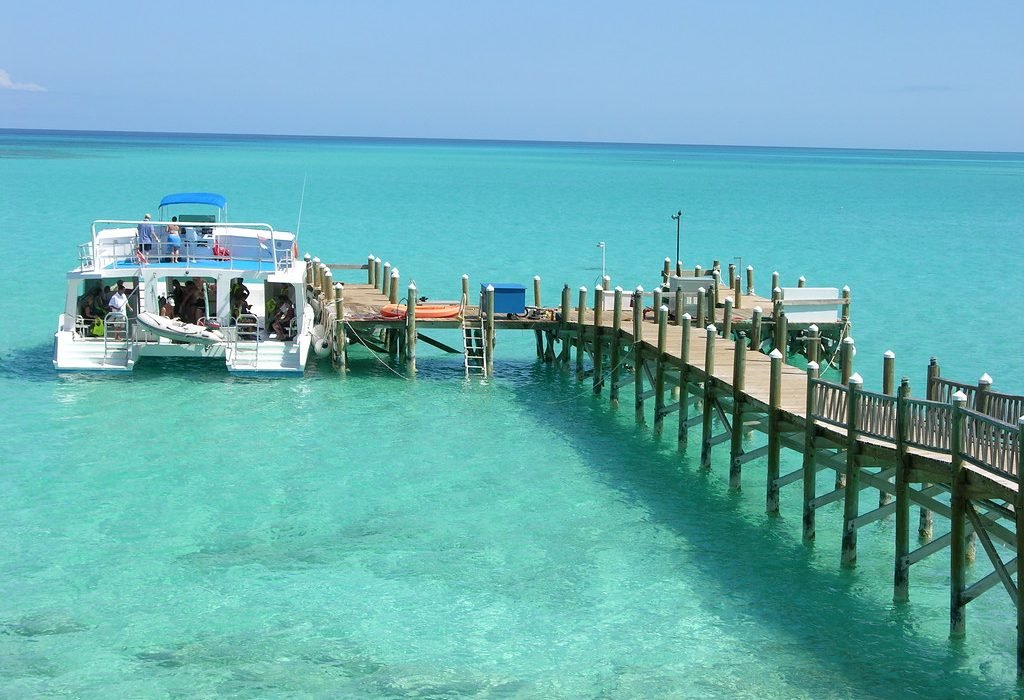
- By late morning the water shifts to impossible turquoise as the bank rises. Bimini’s palms lift over the horizon.
- Tie up at a marina, complete Click2Clear formalities, lower the Q flag, and order a conch salad.
The night departure puts the tricky part (the Stream) behind you in daylight reserve, and lands you in Bimini with sun high enough to read the shallow entrance channel.
Common mistakes
- Crossing on a schedule instead of a window. Weather does not care about your vacation dates. Build slack into the plan.
- Ignoring the Stream’s set. Steer the corrected course from the start rather than fighting it later.
- Arriving at shallow entrances at low light. Time bank passages and harbor entrances for high sun, 10 am to 3 pm, with the sun behind you.
- Under-provisioning. The first grocery run in the Exumas cures this mistake permanently, at $9 per box of cereal.
- Skipping insurance checks. Confirm your policy covers the Bahamas and note any hurricane-season exclusions.
Is the trip worth it?
The Bahamas deliver the clearest water most sailors will ever anchor in, 700 islands across 100,000 square miles of bank and ocean, and anchorages where yours is the only boat. A 50-mile crossing buys all of it. Pick a soft window, respect the Stream, and the passage that sounds intimidating becomes the easy part of the trip.