The best electric outboard motors in 2026 are the ePropulsion Spirit 2 for overall value, the Torqeedo Travel 1103 for premium build and app integration, the Mercury Avator 7.5e for range, the Newport NT300 for budget dinghy duty, and the ePropulsion Navy 6.0 for boats that need real push. For a typical sailboat tender, the 3 hp equivalent class (1kW to 1.1kW) is the sweet spot.
I resisted electric outboards for years. Then I borrowed one for a week of dinghy runs and quit thinking about pull cords, carburetors, and gas cans sloshing in a locker. The technology crossed the line from novelty to obvious choice for tenders and small daysailers, and the 2026 lineup is the strongest yet.
Prices below are US list at the time of writing. Street prices drift, so check current numbers before buying.
Quick picks
- Best overall: ePropulsion Spirit 2. The successor to the Spirit 1.0 Evo adds a 3kW boost mode, better trim, and keeps the floating battery.
- Best premium: Torqeedo Travel 1103. The most refined package, best app, honest range display.
- Best range: Mercury Avator 7.5e. Up to about 34 nautical miles at low speed with the right battery setup.
- Best budget: Newport NT300. Basic, cheap, fine for short calm-water hops.
- Best big-boat option: ePropulsion Navy 6.0. A 6kW unit (roughly 9.9 hp) for heavy dinghies and small keelboats.
ePropulsion Spirit 2
The Spirit line became the default cruiser’s electric outboard for a simple reason: the 1,276Wh battery floats. Drop it overboard during a dinghy transfer and you fish it out instead of writing a check.
The Spirit 2 adds a boost mode that briefly delivers 3kW for punching through chop or current, shallow-water trim, a 90-degree tilt, and an integrated kill switch and steering lock. Continuous power stays at 1kW, the 3 hp equivalent class.
Real-world numbers on a 10-foot RIB with 2 people: about 5 knots flat out for around 75 minutes, or half throttle at 3.5 to 4 knots for 3-plus hours. That covers a week of anchorage errands on one charge.
Expect to pay around $2,300 to $2,600 with battery. Solar charging from a 100W panel tops it back up in a sunny day and a half.
Torqeedo Travel 1103
Torqeedo built this category, and the German engineering shows in the details: the best range computer in the business (GPS-based miles remaining, not a vague battery bar), clean app integration, and a decade of dealer network behind it.
The Travel 1103 delivers 1.1kW with a 915Wh battery. Performance matches the Spirit class closely: think 5 knots max on a typical tender, with 2 to 3 hours at cruising throttle.
You pay for the refinement, typically $2,700 to $3,000. If the range display and build quality matter to you, the premium is fair. The battery does not float, which cruisers notice.
Mercury Avator 7.5e
Mercury entering the market in 2023 changed the conversation, because now every Mercury dealer on the coast services electric. The 7.5e (about 3.5 hp equivalent) uses swappable 1kWh batteries and posts the best low-speed range in the class, around 34 nautical miles at displacement crawl.
It runs heavier than the Spirit or Travel, and the ecosystem (extra batteries, charger options) adds up. For cruisers who want dealer support in every port and maximum range, it is the pick. The 20e and 35e models cover boats needing more push.
Newport NT300
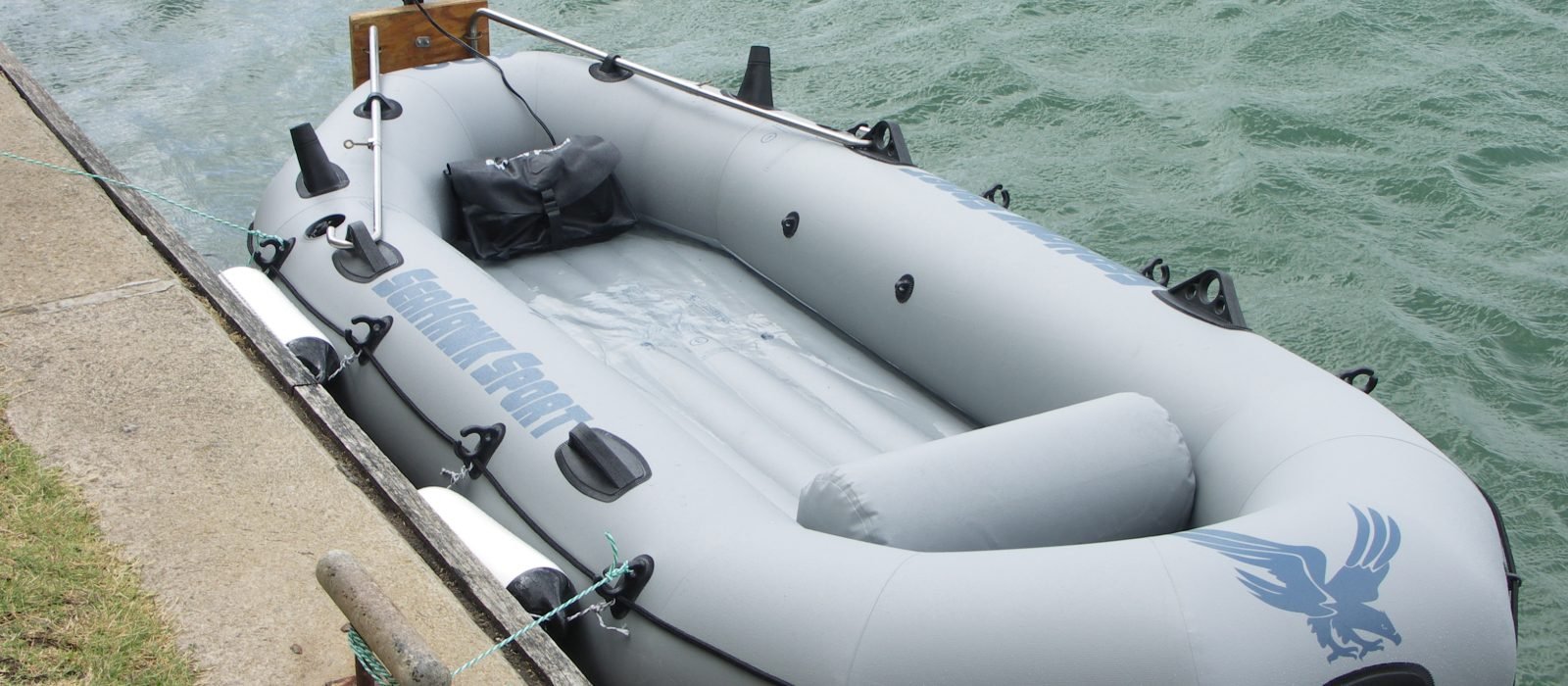
Around $1,000 with battery, the NT300 is the entry ticket: roughly 1 hp equivalent, fine for pushing a small inflatable across a calm anchorage. Range and thrust are modest, and it will not fight current or wind well. As a first electric for short hops, it works and the price is right.
ePropulsion Navy 6.0
When the tender is big, loaded, or doubles as a fishing platform, the Navy 6.0 delivers 6kW (9.9 hp class) with external batteries sized to your range needs. It also suits engineless daysailers and small keelboats as auxiliary power. Budget $4,500-plus with a battery bank.
Electric vs gas: the honest math
A 3.5 hp gas outboard costs $1,100 to $1,400, roughly half the electric equivalent. The electric closes the gap over time:
- No gasoline aboard: no fuel runs with jerry cans, no gas smell in a locker, no ethanol problems after winter storage.
- Maintenance drops to washing salt off and storing the battery at half charge. No carb rebuilds, no impellers, no oil.
- Charging costs pennies, and solar makes it free at anchor.
- Silence. You hear the water and your crew instead of a 2-stroke buzz. This one sells more units than any spec sheet.
The tradeoffs are real: higher purchase price, finite range you must plan around, and slow recharge compared with pouring a gallon of gas. Long dinghy explorations up rivers or 10-mile fishing runs still favor gasoline or a second battery.
How to size one
- Small inflatable or hard dinghy, under 10 feet, 1 or 2 people: 1kW class (Spirit 2, Travel 1103) is plenty.
- 10 to 12 foot RIB, 3 or 4 people, groceries and jerry jugs: stay in the 1kW class but expect 4 to 5 knots, or step to 3kW for margin.
- Heavy RIB or planing hopes: 6kW minimum. Electric planing eats battery fast, so be realistic about range.
- Sailboat auxiliary (up to about 25 feet): Navy 6.0 class pushes a light keelboat at hull speed in calm water. Size the battery bank for 3 times your longest expected motor.
What I would buy
For a cruising sailboat tender in 2026: the ePropulsion Spirit 2. The floating battery, the price, and the boost mode for sporty afternoons make it the complete package. If a Mercury dealer sits in every harbor you frequent and range anxiety keeps you up at night, the Avator 7.5e is the alternative.
Whichever you choose, buy the spare charging cable and set up solar charging early. An electric outboard fed by the sun turns the daily dinghy run into the cheapest, quietest part of cruising.